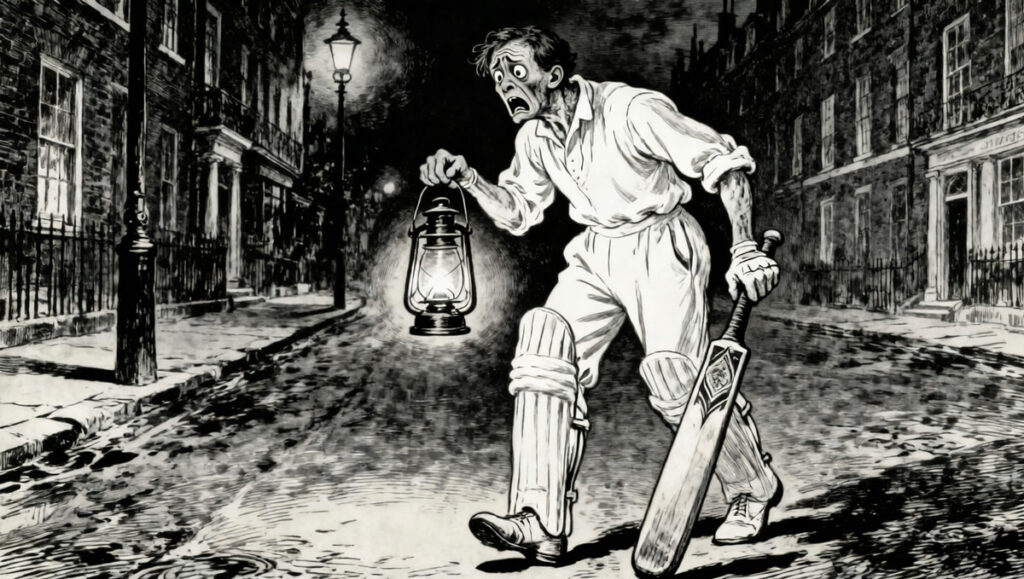
A nightwatchman is cricket’s most polite way of admitting fear while pretending it’s strategy. The idea is simple and faintly absurd: with only a few overs left in the day, instead of risking a proper batter, a team sacrifices a bowler, someone who has spent all afternoon sprinting uphill into the wind, and asks him to wander out, face hostile fast bowling, and ideally not perish before sunset. It is the sporting equivalent of sending the intern to “just hold the door” during a hurricane.
The logic is allegedly tactical. The reality is that it exposes cricket’s talent for overthinking. Rather than trust the batter whose actual job is, well, batting, teams send out a human sandbag and hope the storm blows over. Everyone pretends this is normal. The nightwatchman trudges out knowing the plan hinges on him absorbing danger the specialists would rather not touch. This is bravery by delegation.
Occasionally the nightwatchman thrives, which only highlights the ridiculousness. A lower-order player grinding out a gritty 30, or worse, an accidental fifty, triggers a quiet crisis: if he can survive the evening and then score runs in the morning, what exactly is everyone else doing? Cricket loves hierarchy until the hierarchy edges a few fours through third man.
For comparison: imagine a hospital deciding that, because it’s nearly the end of the shift, a junior accountant should perform the final surgery of the day — “just stitch things up and we’ll revisit in the morning.” If it works, management congratulates themselves for “protecting resources.” If it doesn’t, everyone agrees the accountant should have shown better technique.
The nightwatchman exists because cricket is both terrified of the dark and convinced it can outsmart fate with a small procedural workaround. It almost never does — but for a few overs each evening, it tries anyway, and the poor bowler pays the bill.