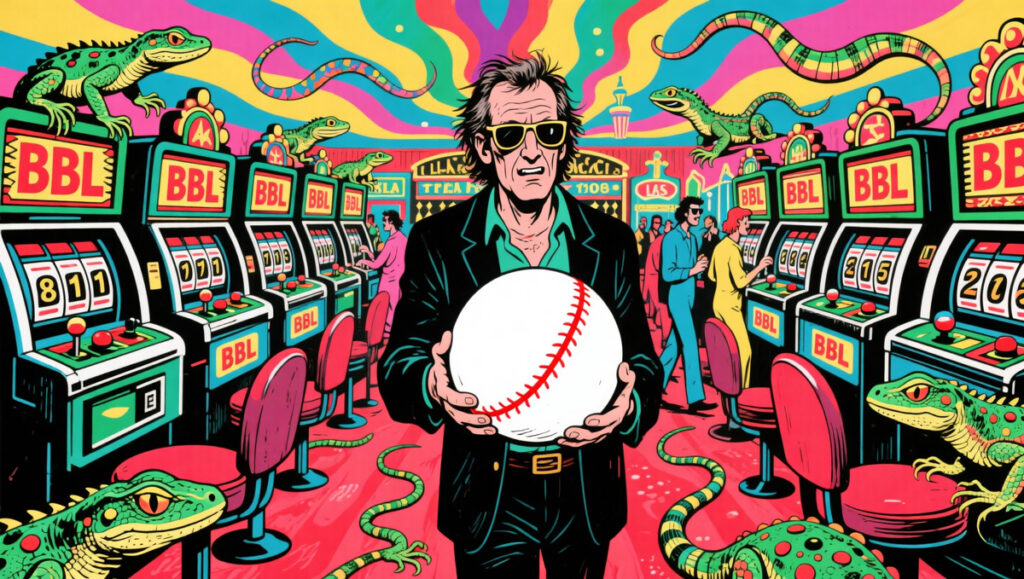
It begins, as all good hallucinations do, under floodlights that feel like interrogation lamps. The pitch is a slab of madness, the crowd already fizzing with sugar and beer, and somewhere deep in the corporate cortex of Cricket Australia, a banker has decided that this — this first over of the Big Bash — needs to be a democracy.
Keep the Ball, they call it. Sponsored joy, courtesy of Westpac. The people’s over. One brief window where a cricket ball ceases to be sacred leather and becomes loot. A crimson comet screaming into the night, and the mob rising, delirious, a thousand hands reaching as if salvation comes stitched in Kookaburra hide.
I can see it now — first delivery, a half-volley of destiny. The batter swings like he’s trying to hit debt forgiveness itself. The ball rockets skyward, neon halo spinning, and for a heartbeat the entire stadium levitates in shared insanity. Then — impact. A kid in a bucket hat, pupils like dinner plates, holds aloft the prize as the crowd howls. Somewhere in the chaos, an umpire fumbles for a spare ball, the bowler mutters dark oaths about capitalism, and a Westpac executive sighs with the satisfaction of a man who’s monetized joy.
This isn’t sport anymore; it’s performance art under fluorescent pressure. Cricket reinvented as a controlled substance. The first over is a trip — pure, blistering excess — and then it’s gone. Reality staggers back in. The umpires pull out a new ball, fresh and innocent, pretending the last 90 seconds of bedlam never happened. But you can’t unsee it. You can’t unhear the roar that sounded like civilization unclenching.
The Big Bash has always flirted with delirium — fireworks, Power Surges, fielding restrictions that sound like dance moves — but this is different. This is philosophical chaos, packaged and branded, the great Australian carnival swallowing its own mythos. Alistair Dobson, the smiling oracle of innovation, calls it ‘fan-focused,’ and he’s not wrong. The fans are the experiment now. Every six a live-action lottery, every boundary a potential relic.
It’s a magnificent madness, this idea that you can buy the soul of cricket by the over. Baseball’s been doing it for a century, of course — America’s holy relic machine — but here it feels like the end of something polite. Cricket was the last sport pretending to be a sermon. Now it’s an acid trip in whites, sponsored by your local bank.
Look closer and you’ll see the absurd beauty of it. A ball leaves the field of play — poof! — it belongs to the crowd. A token of chaos in a game built on control. The bowlers, the purists, the ghosts of reverse swing — they’ll hate it. They’ll mutter about ‘deterioration’ and ‘balance between bat and ball.’ But for one over a night, the laws of physics take a sick day and joy gets the strike.
And then there’s the clock, that demonic metronome punishing slow over rates. Five minutes and forty-five seconds before the Powerplay turns apocalyptic. A digital whip keeping the circus moving. No fines, no bureaucratic mercy — just time expiring mid-over and fielders sprinting into the circle like they’ve seen the face of God.
Somewhere high above it all, the scoreboard blinks like a slot machine and the commentators gasp for adjectives. You can almost taste the ozone and hot chips. The air hums with electricity and misplaced faith. Cricket, that gentle colonial pastime, has downed two cans of energy drink and a sponsorship deal and is now howling at the moon.
When the over ends, sanity tiptoes back. A new ball. A new illusion. But the damage is done. Somewhere in the stands, a child clutches that first ball, eyes wide, heart racing, already hooked for life. He doesn’t know it yet, but he’s been recruited — another believer in the Church of the Ridiculous, where sixes fall like prophecies and the umpire’s finger is the law of a merciful god.
And as the crowd settles, as the players reset, the night breathes out. Cricket has gone mad again, thank heaven. It was always meant to.